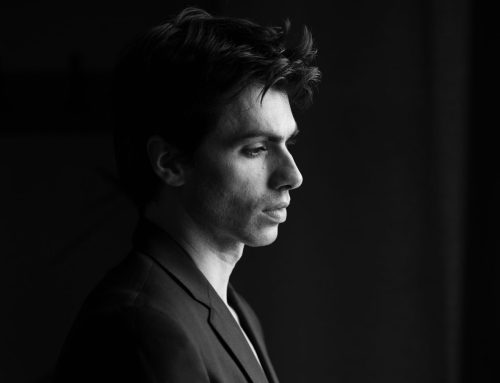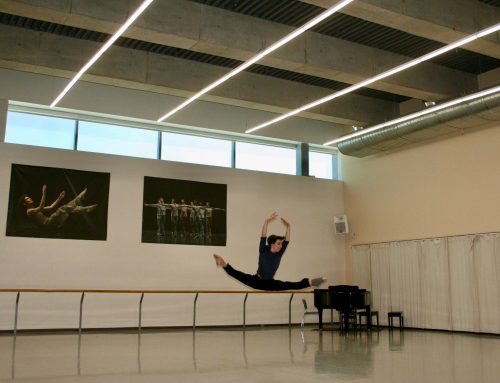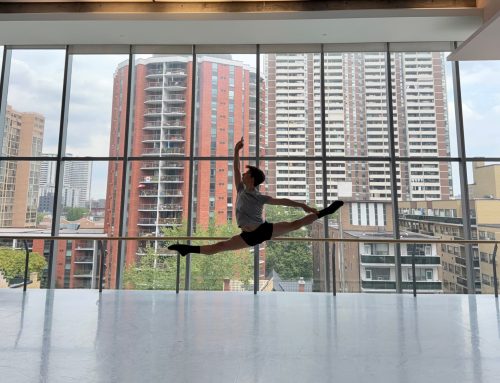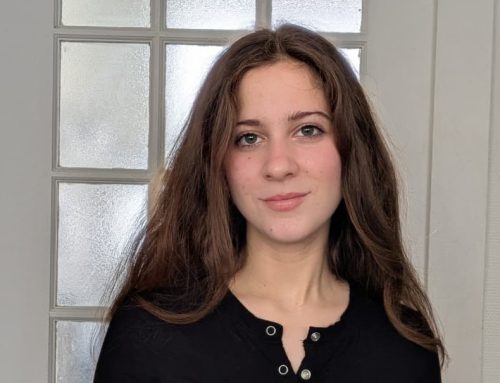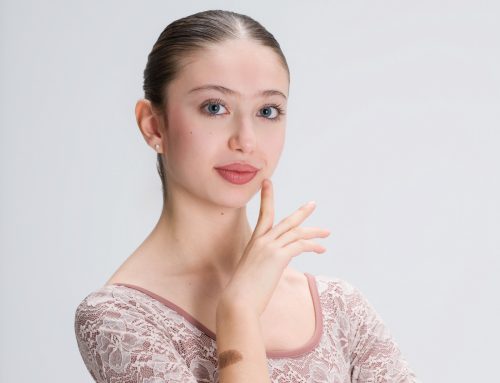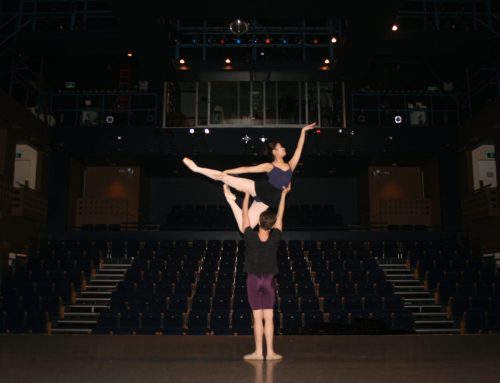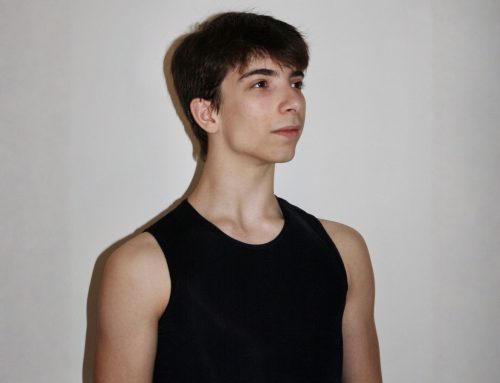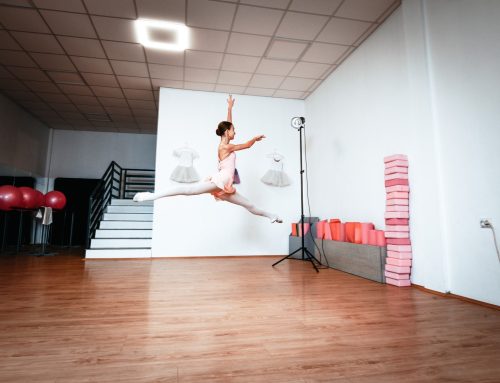
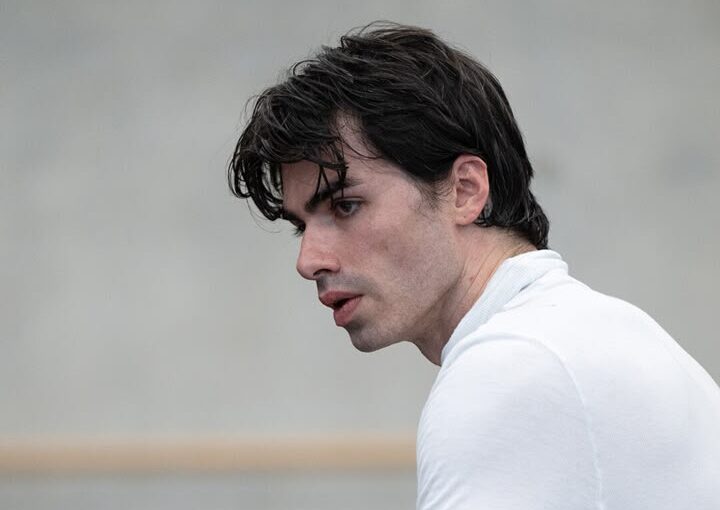
As part of his Panic in the Wings project, Calo Failla sat down with Creative Fellowship Ballet Fellow Felipe Meijueiro Gonzalez to talk about the questions that arise when one chapter of a dancing life is ending and another is about to begin.
What do dancers really want to know about the profession before they enter it — and what do experienced dancers wish they had understood earlier?
Felipe is entering his final year of ballet training and preparing for his first professional auditions. Calo’s career has already taken him through different companies, contracts, artistic environments and career transitions.
Their conversation goes beyond technique and performance to the questions that are rarely discussed openly at ballet school: how to stand out at an audition without trying too hard, how confidence develops, how to build an artistic identity, how to deal with comparison and burnout, when to accept a “no” — and when to ask again.
This is the second part of their live conversation. After the first session, the discussion continued among Felipe’s classmates, Calo’s colleagues and young dancers following the series — bringing new questions and giving them a reason to continue.
This time, Felipe takes the lead.
Felipe: What can make a dancer stand out at an audition without trying too hard to get noticed?
Calo: I think the most important thing is being yourself.
Don’t try to be loud just because you want somebody to notice you. You don’t need to arrive dressed in red and yellow saying, “Hey, I’m here.”
Be present. Breathe. Dance.
Of course, dress appropriately and prepare yourself, but don’t try to copy somebody else or manufacture a personality for the audition.
My advice is very simple: be yourself, don’t be loud, breathe — and enjoy it.
Enjoyment is probably the most important part. If you enjoy dancing, the people watching you can see it too.
Felipe: I’m actually really excited about my first auditions. I want to try to find that joy in them.
What helped you build confidence when you were still figuring yourself out as a dancer?
Calo: Confidence is something I am still working on.
It develops little by little through performing, auditioning and experiencing situations in which things don’t always go the way you expected.
For me, confidence is not believing that you are always the best.
It is knowing that even when something goes wrong, you still have something to offer.
Sometimes somebody looks incredibly confident from the outside, but we have no idea what is happening inside that person. What looks solid today may not feel solid tomorrow.
There isn’t really a point where you suddenly say, “Now I am confident.”
It is an ongoing process.
And sometimes what you feel about your dancing is completely different from what somebody else sees. You can finish an exercise thinking, That was terrible, and somebody beside you says, Actually, that was the best I’ve seen you dance.
We don’t always know what comes across to the other side.
Felipe: When did you start building your own identity as an artist rather than simply trying to be the dancer you were expected to be?
Calo: Identity comes with time.
Sometimes it comes through a role. Sometimes through working with a choreographer who gives you the freedom to put some of your own personality onstage.
It also comes from the people around you.
And strangely, sometimes even the people who don’t believe in you help you develop. Someone pushing you down can force you to understand what you believe about yourself.
There are also very practical things. If I know I am physically weak in a certain area and I work on strengthening it, that affects me mentally too.
Everything is connected.
I feel very different now from how I felt when I was 20. As time passes, your personality develops. Things and situations that used to disturb you don’t necessarily disturb you anymore.
The way you approach dancing changes too.
Sometimes we say, “Oh my God, I’m getting old.”
But you are not simply getting old. You are changing. You are developing.
The problem is not developing.
The problem would be not developing at all.
Felipe: Ballet careers are short, but building confidence and artistic identity takes such a long time. How do you stay motivated without becoming obsessed with constantly becoming a better dancer?
Calo: Curiosity.
Curiosity about people, movement, emotions and everything I still don’t know.
I try to remember why I started dancing in the first place. There was something magical about it.
And sometimes we forget that.
Because ballet is competitive and the career is short, we can become completely focused on improvement.
When I was younger, I wanted to improve constantly. But eventually I understood that being a dancer cannot only mean becoming better every single day.
You cannot stay in maximum gear all the time.
You have to learn how to rest and recover.
That is difficult when you are young because you are still shaping yourself. Your school is shaping you. You are trying to find a contract. There is pressure everywhere.
I experienced this myself when I knew I wanted to leave Vienna. I became obsessed with finding the next step.
I wanted to work, improve, search for another job, travel for auditions, rest, eat, recover — everything at once.
At some point you have to say:
Wait. Step by step.
Obsession can actually block you.
It happens even with something as simple as pirouettes. You see somebody turning more than you, you become obsessed with doing the same thing — and suddenly you cannot turn anymore.
You need ambition. You need hunger.
But you also need humility.
And sometimes growth means doing the opposite of what your instinct as a dancer tells you.
Recently I finished work early and my first thought was: physiotherapy, workout, this exercise, that exercise.
Then I thought: No. I’m going home.
I rested.
That is something I am still learning — how to rest without feeling guilty about it.
Felipe: That connects directly to another question. How do you avoid burnout?
Calo: Burnout is a huge subject, and it doesn’t only concern dancers.
I don’t think burnout suddenly appears one morning.
It starts earlier, like an inflammation or an injury that is developing before you really feel it.
And it is connected to obsession.
You can become obsessed with work, improvement, proving yourself or hundreds of other things.
That is why stepping away matters.
See friends. Travel. Have a completely normal day. Do something unrelated to ballet.
We also have to stop pretending that ballet is only physical.
We dance with our thoughts, emotions, minds and bodies. Everything is involved.
If you are mentally exhausted, sometimes you need to do something completely different.
And sometimes you need to talk to someone — including a professional — because you should not always feel that you have to get through everything alone.
Ideally, dancers should also have people around them who can guide them: a teacher, ballet master, rehearsal director or somebody who can simply say:
You don’t feel great today. It’s okay. Take it easy.
It should be allowed to take it easy sometimes.
When you feel burnout approaching, stop for a moment.
Breathe.
Stay quiet.
Look at what is actually making you feel this way. Is it the performance? The school? The people around you? The pressure you are putting on yourself?
Awareness helps you understand what is really happening.
Felipe: Something you said in our previous conversation stayed with me: sometimes we want something because somebody else has it, rather than because we really want it ourselves.
That happens at school too. You see what somebody else is doing or achieving and become frustrated.
Calo: Exactly.
So let me ask you something.
What do you want right now?
Felipe: That is a big question.
Career-wise, I would like a stable contract somewhere I enjoy working. A city I like, opportunities to perform a lot, a good environment and good direction.
Calo: Good.
Now imagine somebody else gets exactly that before you.
It might trigger you.
But that does not mean it will never happen for you.
We talked last time about why some people succeed faster than others.
We are different.
Working harder does not automatically mean something has to happen faster for you.
Sometimes something you desperately wanted does not happen because that environment was not actually right for you.
It is like a relationship. We have relationships with people, directors, friends, institutions and places.
Sometimes what feels like rejection at first may later turn out to have protected you from something that wasn’t right.
During my final season in Vienna, for example, I really did not want to stay.
Later, I understood why I had stayed.
The season I had expected to be terrible became one of my best seasons there.
Sometimes you have to stop immediately defining something as good or bad.
Wait.
See what happens.
You never know.
Felipe: I have another situation in mind.
Sometimes you really want to do something, but a director, teacher or somebody above you doesn’t allow it.
Do you trust your intuition and keep pushing for it, or do you simply accept the decision?
Calo: First, dancers are always affected by other people’s decisions. That is part of the profession.
Whether you are a student or already in a company, somebody may say no.
The first questions I would ask myself are:
What am I asking for?
How am I asking for it?
And do I genuinely want this?
Or do I want it because I saw somebody else being allowed to do it?
Then I would try to understand why the person said no.
Ask them.
You can say: I accept the decision, but may I ask why?
Perhaps they see something you don’t.
Recently in Düsseldorf I needed to ask my director for a day off for an exam.
Before asking, I had to consider both possibilities.
What happens if he says yes?
And what happens if he says no?
Actually, when I thought about it, a no would not have been catastrophic. I would have stayed, rested, saved the travel and focused on an upcoming premiere.
Then he said yes.
But the exercise was important because you cannot make a request believing that only one answer is acceptable.
If something is genuinely very important to you, though, and you believe the decision should be reconsidered, ask again.
Maybe write an email once you are calmer and can explain clearly why it matters.
Follow your instinct, your intuition and your heart — but also respect where you are.
That company or school is the place where you work, share the stage, learn and build your artistic life.
No place is perfect.
So listen to yourself, but also understand the environment you are part of.
Felipe: I’m really excited about auditioning.
This summer I had the chance to work with new dancers and directors and learned a lot. I think this year will teach me a lot too.
I’m trying to let time pass and let whatever needs to come, come.
Calo: I almost want to ask you, “What is your next audition?”
But I won’t.
Because I understand keeping those things private.
When I was auditioning, friends used to ask me why I didn’t tell them where I was going.
For me, when something is still very small, it feels fragile.
Sometimes I don’t want to share that energy yet. I keep it between myself, what I believe in, and maybe the people closest to me.
So I won’t ask where you are going.
But do you already have some auditions in mind?
Felipe: Yes.
Some auditions have already been announced and I’m working on those applications. There are also some for next year.
But I’m not going to say where yet.
I’m trying to trust that the right place will appear.
Calo: It will show itself.
And remember: you are young. Wherever you go first, it doesn’t mean you have to stay there forever.
A career is very personal.
I changed many times.
Go and discover.
And try to change the way you think about the word audition.
We hear “audition” and it sounds like an exam.
Something frightening.
But actually, it is a day when you walk into a room full of people who don’t know you yet.
At school or in a company, people think they know who you are. Sometimes they put a kind of stamp on you.
At an audition, the people watching you have never met you.
You have an opportunity to present yourself again.
You can simply be yourself.
Felipe: That is exactly why I’m excited.
I have never auditioned for a professional company before, so I don’t know what will happen.
But I’m ready to fall.
I’m ready to fail.
Because then I can come back, learn more, know more, become more experienced and try again.
Calo: You will find your way.
Go without too many expectations.
Don’t become obsessed with the result.
Enjoy discovering where life takes you.
And don’t forget to enjoy what you do.
That is probably the most important thing.