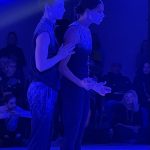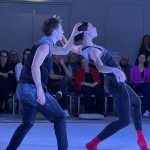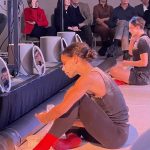
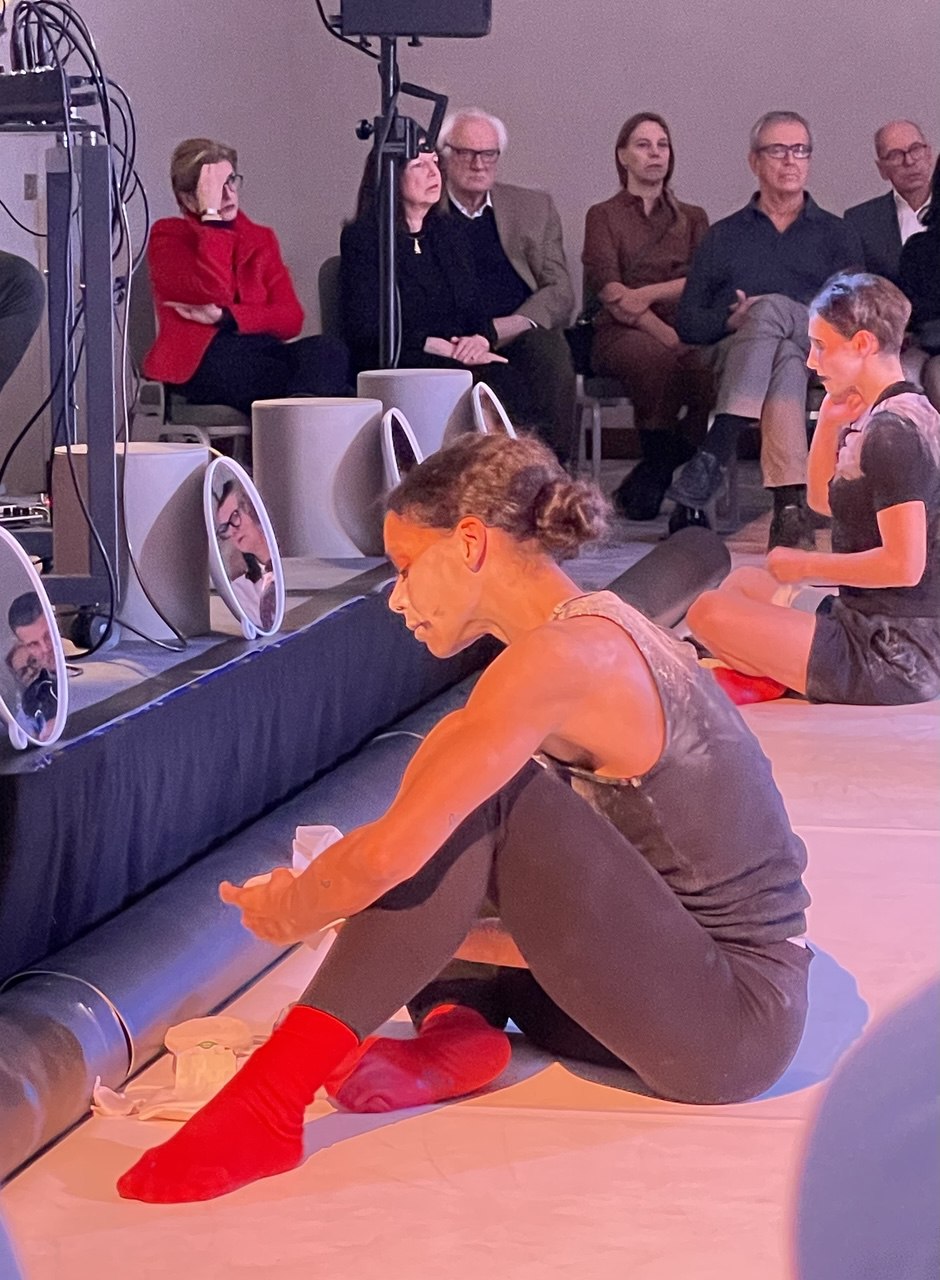
For the past several years, Creative Fellowship has been closely following the work of Rebecca Horner, Vienna State Ballet soloist, whose compact, adaptable Tanzt projects have consistently pushed dance theatre beyond conventional stages. By rethinking scale, format, and context, her work brings choreography closer to people — making it accessible, site-responsive, and deeply attuned to venues outside traditional theatrical settings.
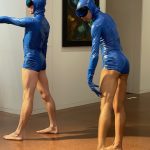
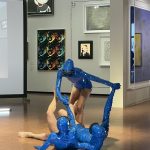
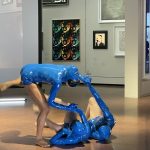
In 2025, we witnessed Beef at the Imperial Riding School Hotel and Marias – Mensch vs. Maschine* at the Heidi Horten Collection — two striking examples of Rebecca’s ongoing research into new performative formats and the dialogue between body, space, and technology.
This week, Rebecca publicly announced her departure from the Vienna State Ballet. On this occasion, we are sharing an English translation of her interview originally published in German in Kronen Zeitung by Stefan Musil, in which she speaks openly about the reasons behind her decision and her plans for what comes next.
We are longtime admirers of Rebecca’s artistic curiosity and her commitment to expanding the language and conditions of dance theatre. We are equally happy to continue supporting her by sharing information about international opportunities and formats through which her projects can reach new audiences beyond Austria.
Kronen Zeitung
Stefan Musil
31 January 2026
Star dancer Rebecca Horner recently surprised audiences with her departure from the Vienna State Ballet. In an interview with Krone, she explains the reasons behind her decision – and reveals her plans for the future. For fans: she can still be seen a few more times on the Volksoper stage in Marie Antoinette.
Krone: Why did you leave the State Ballet?
Rebecca Horner: It wasn’t a decision I made overnight. Looking back, it had probably been growing in me for about a year and a half. I want to focus on the future. The State Ballet helped me immensely and brought me to where I am today. Now I feel strong enough to take flight – after 18 years.
That’s a long time.
Half of my life. Actually even longer, because I was already on stage 26 years ago in La Bohème or Rienzi as a child.
What triggered the farewell?
I wanted to move forward. If I had stayed, I would have been stepping in place too much. It was simply a decision to focus on my own art – on what truly moves and interests me.
How did that process feel?
Of course, it’s not easy to say goodbye after such a long time. But the decision-making over the past year and a half was especially difficult, with many ups and downs – including questioning myself: Is something wrong with me? Where is my mistake? Eventually I realized it’s simply a system that has always worked this way and always will. I just kept moving. I want to live in the present with open eyes.
Is there an “expiration date” for dancers?
In large institutions, I would say 40 – maybe 42 – is a kind of magic number. You know that things are slowly coming to an end. But I want dance to remain part of my life.
You are turning 37 soon.
And of course I feel that. But for me, stopping dance was never an option. That’s why I wanted to use this moment – when I have both experience and still the strength and energy – to start something new, in whatever framework.
Under which ballet director did you start?
I started under Gyula Harangozó. After that came Manuel Legris.
After Legris came Martin Schläpfer, representing contemporary dance. In September, Alessandra Ferri took over, seemingly returning to a more classical direction. Does every change in leadership feel like a reset?
You don’t go to work thinking about it, but of course you’re aware of being observed. To realize at 36 that everything is starting over again – that you have to prove yourself once more, fight for your place again – possibly for the last five years of your career at the State Opera – that was also a moment when I began to think further.
Was Ferri’s arrival a factor in your decision?
When the season plan is presented, you can roughly see where you’ll be placed. In fact, there was very little where I could have shown my full potential. And of course, the job is incredibly demanding. Then the question follows: Do I need to prove this to myself? Do I really need that?
You were also increasingly cast as mothers, such as Maria Theresa in Marie Antoinette.
I started dancing mother roles quite early – already under Legris, for example Bluebeard’s mother. I was younger than the female lead and younger than my “son.” But I liked those roles. It’s also beautiful when you’re trusted with them. And I am a mother myself – that changes you.
Were you better suited to the Schläpfer era?
For me personally, yes. With Schläpfer there was an immediate closeness to contemporary dance. But Legris, although deeply rooted in classical ballet, was also invested in advancing contemporary work. Now the institution is rowing back.
What is the atmosphere like in the company now?
Highly motivated. Many incredibly talented new dancers have joined – real driving forces for the energy of the company and the level of classical ballet. That’s very positive.
You were seen as an expressive dancer for modern works rather than a classical prima ballerina.
I absolutely wanted to become a classical ballerina during ballet school and followed that path for a long time at the State Ballet. But then choreographers began choosing me for new works. So I became the modern dancer in a classical company. Later, when I went to The Hague to the Nederlands Dans Theater, it flipped – in a contemporary company, I was suddenly the ballerina.
That was during the 2022/23 season?
Exactly. That year took me enormously further. I commuted, but perhaps I should have moved my family to The Hague so I could have danced for another five years in one of the most renowned contemporary companies. I didn’t want to pull my children out of their social environment, so it was clear I would return. Still, it was an incredibly important time. Suddenly, the blinders were gone – and I promised myself never to put them back on.
What comes next?
I want to continue my projects. I’m not saying goodbye to the stage – only the Vienna State Opera is no longer my home. There are many stages in Vienna, and I have a great desire to dance on others. I especially love the Volkstheater. It would be a dream to present a dance production there, if they were open to it. In May 2025, Mari*s – Mensch vs. Maschine was shown at the Heidi Horten Collection, where I also danced. We were three dancers and a cameraman – a kind of station theatre across all three museum levels, combined with a live video performance. Dance doesn’t have to take place only on a big stage.
After films like Mein Opa ist der Beste and Mein Opa und die 13 Stühle with Otto Schenk, you were a child star. Are you considering acting again – TV or film?
Maybe. Now I would have the courage and desire to explore that again. For a long time, it wasn’t an option – I had to be at the barre every day at 10 a.m., sometimes with rehearsals even on Saturdays.
Your own company?
That is definitely a wish. My husband – dancer and choreographer Andrey Kaydanovskiy – and I founded the collective tanzt. some time ago, and we already have many plans for Vienna in 2026. We like to work with the present moment. We have three children – they are the future. I don’t want to miss the past; I can always revisit it in my mind. But now I have to take care of everything else and keep moving forward – even if it’s in smaller steps.
Original version of the article can be accessed here: https://www.krone.at/4032544